A New Gateway to British Higher Education for Ukrainian Students
Up to £9,800 a Year in Educational Support Is Offered to Ukrainian Students for the 2026–2027 Academic Year
The United Kingdom and Scottish governments continue to support Ukrainians who have been displaced by the war, helping eligible individuals gain access to accommodation, public services and education. Young Ukrainians living in Britain can participate in both online and face-to-face educational programmes, creating new opportunities to continue their studies and build their professional futures.
In England, people granted permission under specified Ukrainian immigration schemes may be eligible for student support and “home” tuition-fee status instead of being charged international fees. In Scotland, eligible Ukrainian students beginning further or higher education in the 2026–2027 academic year may receive tuition-fee and living-cost support, subject to the applicable immigration, residency and funding conditions.
Against this background, the International Business Academy has announced a large-scale Grant Programme for Ukrainian Students for the 2026–2027 academic year. According to the programme organisers, the initiative is intended to complement existing public support and make internationally oriented business education more accessible to Ukrainian young people.
Educational Grants for 3,000 Ukrainian Students
The Grant Programme is expected to provide up to 3,000 Ukrainian students with financial assistance towards their education. According to IBA, grant support of up to £9,800 per student per academic year may be available, subject to the programme’s eligibility criteria, admissions requirements and individual award conditions.
The organisers state that funding for the initiative has been allocated with the participation of European support funds and the European Business Development Association. The Global Education Consortium International Business Academy, UK, became the first educational institution within the consortium to receive access to the programme.
Successful applicants may be able to study towards an IBA British Diploma or select an eligible UK–Ukraine double-diploma pathway. Programmes are expected to combine online learning with in-person academic activities, enabling Ukrainian students living in different parts of the United Kingdom—or temporarily residing elsewhere—to participate.
Applicants should verify the accreditation status, awarding institution, recognition arrangements, programme content and precise financial conditions of their chosen qualification directly with IBA before enrolling.
Additional Opportunities for MiniBoss Graduates
Graduates of MiniBoss Business School may also receive additional consideration when applying through the programme. Under the admissions framework described by the organisers, a registered MiniBoss International Diploma can contribute additional points to an applicant’s internal rating.
Depending on their academic record, achievements, application quality and the availability of funding, candidates may be considered for scholarships covering between 10% and 90% of tuition costs. Scholarship decisions remain subject to the official rules and individual assessment procedures of the relevant institution.
Applicants are advised to submit the registration number of their MiniBoss International Diploma together with a Letter of Recommendation from the business school. These documents can provide evidence of a student’s entrepreneurial education, project experience, leadership potential and participation in international academic activities.
However, possession of a MiniBoss diploma or recommendation letter should not be interpreted as automatic admission to every British university. Each university and awarding institution maintains its own entry requirements and makes independent admissions and scholarship decisions.

Education for a New Innovation-Led Economy
The programme reflects a wider transformation taking place across the global economy. For generations, national prosperity was strongly associated with access to natural resources, industrial capacity and physical infrastructure. Today, economic leadership increasingly depends on innovation, technology, entrepreneurship, human capital and the ability to transform knowledge into valuable products and services.
This transition from a resource-oriented economy to an innovation-oriented one requires universities to reconsider both what they teach and how they teach it. Traditional academic knowledge remains essential, but students also need interdisciplinary thinking, digital competence, business modelling, financial literacy, project management, creativity and practical experience of solving real-world problems.
Modern graduates must be prepared not only to search for employment but also to create new professional opportunities, launch startups, develop innovative products and generate jobs for others. They need to understand how ideas become projects, how projects attract investment and how organisations can expand across international markets.
A New Model of International Higher Education
The International Business Academy presents its educational model as a response to these emerging economic realities. Its programmes aim to combine academic study with applied business education, entrepreneurship, innovation and international cooperation.
Online learning makes this model accessible to students regardless of their location, while face-to-face sessions provide opportunities for teamwork, networking, mentoring and practical project development. This blended format can be especially valuable for Ukrainian students whose living circumstances may change or who cannot regularly travel to a traditional university campus.
IBA also plans to strengthen cooperation with universities and educational organisations in different countries through international academic consortia. Such partnerships can help institutions combine expertise, develop joint programmes and create qualifications that respond more effectively to the needs of students and the global labour market.
For Ukraine, investment in the education of young people is also an investment in reconstruction. Students studying business, management, technology and innovation today may become the entrepreneurs, executives, investors and public leaders who rebuild Ukrainian communities, establish companies and create employment in the years ahead.
Applications for 2026–2027
The Grant Programme offers Ukrainian students an opportunity to continue their education, obtain internationally oriented qualifications and develop the practical skills required by the modern economy.
Prospective students should contact the International Business Academy directly to confirm:
programme and applicant eligibility;
the amount and duration of grant support;
tuition fees not covered by the grant;
online and face-to-face study options;
diploma-awarding and accreditation arrangements;
scholarship assessment criteria;
application deadlines and required documents;
recognition of qualifications in the UK, Ukraine and other countries.
For thousands of young Ukrainians, access to education represents more than an academic opportunity. It is a path towards independence, professional confidence and meaningful participation in Ukraine’s future. By connecting financial support, international education and innovation-focused programmes, the new initiative seeks to help Ukrainian students transform disruption into development—and ambition into long-term achievement.

Odesa National Economic University was chosen as the first university to receive a grant for its high achievements in student education and 100 years of experience.
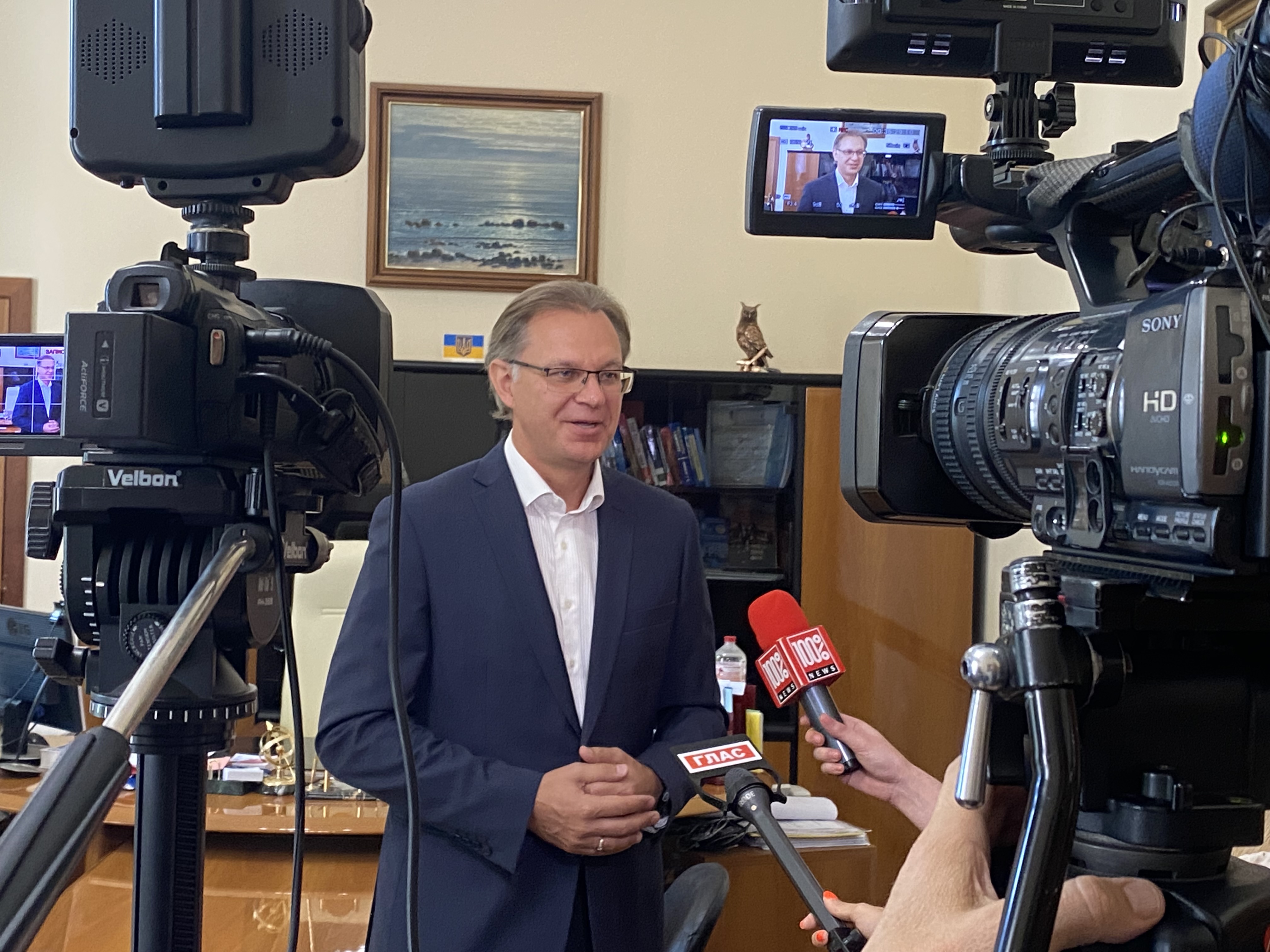
P.S. This is the sighning the Agreement of cooperation with International Business Academy IBA Consortium, rector - Andrew Azarov, and Odesa National University of Economics - ONEU, rector - Anatoly Kovalev.
#IBA #InternationalBusinessAcademy #businesseducation #university #business #MBA #britishhigheducation #britishdiploma #britishuniversities #universities