

An excerpt from the book by renowned entrepreneur and innovator Dr Olga Azarova, The Full Potential of the Human Being: The Eight Intelligences, offers a clear conceptual foundation for understanding what it means to be “alive”. As an introduction to the methodology of MINIBOSS & BIGBOSS BUSINESS SCHOOLS, this text presents a broader vision of life itself — and of the kind of education humanity needs in order to understand, develop and consciously manage life for the benefit of the individual and the Planet.
A little science is useful for all of us, isn’t it? Yes, life is a remarkable journey — one that human beings instinctively wish to extend for as long as possible. Yet within this journey, some processes may be prolonged, while others may be shortened. In other words, the quality and duration of life can be consciously influenced if we understand three fundamental questions: who are we, how do we function, and how can we manage our organism and, consequently, our life?
From 20 to 70 Years
Of course, human life cannot yet be extended indefinitely. However, we are already capable of influencing many biological and behavioural processes — and, to a significant extent, their outcomes. While scientists around the world continue to investigate how to extend human life, slow ageing and perhaps one day approach biological immortality, it is worth remembering how far humanity has already progressed.
The average life expectancy of Neanderthals is believed to have been approximately 20 years. Early Homo sapiens often lived around 30–35 years. In the Middle Ages, average life expectancy remained roughly within the same range. Only with scientific, medical, hygienic and technological progress — especially from the 17th and 18th centuries onward — did human life expectancy gradually increase to 50–60 years. Today, in many parts of the world, the average lifespan has reached approximately 70 years or more.
At the same time, many factors continue to shorten human life: wars, epidemics, disease, hunger, environmental degradation, chronic stress and destructive lifestyles. Yet when a person is equipped with knowledge — when one understands how to operate and protect one’s own “biological machine”, the human organism — life no longer appears merely as suffering or as a chain of random fatal events. Instead, it becomes a conscious voyage: a ship of happiness, meaning and self-directed development.
Yes, the ocean of life contains storms, whirlpools and even “pirates”. There will be crises, losses, obstacles and uncertainty. But a person can withstand the pressure of these forces and process defeat, deprivation and pain more effectively when they understand what they already possess, what may await them beyond the horizon, and what price is paid for victories and failures in every battle of life. Readers interested in the wider educational and leadership context can explore the 100% NEWS categories.
Question No. 1: Are You Alive?
Surprisingly, not every reader will answer this simple question with an immediate “yes”. Some may pause, reflect on their current or past experience, and answer: “I do not know”, “only partly”, or even “is this really life?”
Such uncertainty often arises when a person lives unconsciously — without studying the world, without understanding the self, and without recognising the true aspirations of the body, mind and spirit. Many people pass through life without activating a significant part of their potential. They may fulfil only a fraction of their biological, intellectual, emotional, creative, social and spiritual capacities. At the end of life, some still ask: “Was that really life?”
Question No. 2: Do You Want to Discover the Nature of Your Personal Potential?
If your answer is yes, then you are fortunate: you are not only ready to study yourself and the world, but also to act. In this case, this book may become your personal Book of Life — a source to which you return again and again, finding new answers, insights and motives for the flourishing of your life.
This life may be relatively short in biological terms, yet it can be extraordinary, meaningful, creative and deeply fulfilled. For this purpose, the eight-book cycle The Full Potential of the Human Being, based on Olga Azarova’s methodology, explores each element of human potential separately: each intelligence, each dimension of development, and each major theme of human life in a holistic and systematic way.
In this first book, the task is to understand life itself: its relationship to macro-systems and micro-systems, its universal biological and evolutionary laws, and the meaning of your individual life through the lens of your own potential. This understanding becomes the first and greatest wealth of human perception: the ability to recognise oneself within the world. For further articles on education, development and leadership, see the Education section of 100% NEWS.
Human potential means the latent capacities, abilities and developmental possibilities of a person. In this article, the term is used not only biologically, but also educationally, intellectually, emotionally, creatively and socially.
So, What Is Life?
Life can be understood as an active form of the existence and organisation of matter that possesses the defining properties of living systems. Since there is no single universally accepted definition of life, the concept is most accurately described through a set of characteristics that distinguish living matter from non-living matter.
Below are the key features of living organisms and biological systems.
Essential Characteristics of Living Systems
1. Cellular Organisation
Life exists in a cellular form. The cell is the basic structural, functional and biological unit of life. Outside the cell, life as a complete self-regulating system does not exist.
Viruses occupy a borderline position between living and non-living matter. They demonstrate certain properties of living systems only after transferring their genetic material into a host cell, where they use the cell’s molecular machinery for replication.

2. Similarity of Chemical Composition
All living organisms share a fundamental biochemical basis. Their structure and functions depend on water, carbon-based organic molecules, oxygen, carbon dioxide, mineral salts, proteins, lipids, carbohydrates, nucleic acids and other biologically active compounds.
This chemical similarity reflects the unity of life on Earth and the common biochemical principles underlying all organisms.

3. Metabolism: Matter Exchange and Energy Transformation
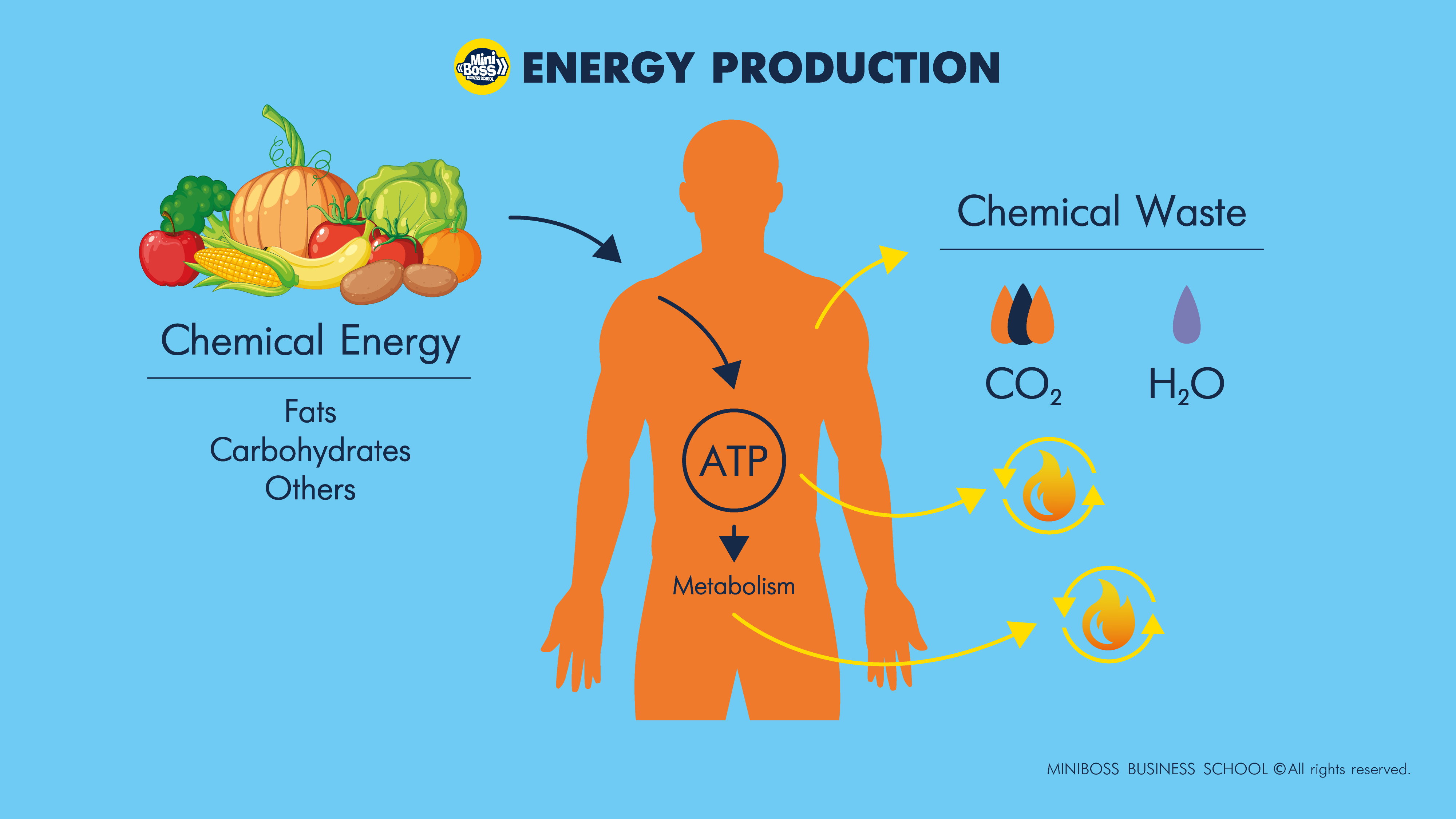
Metabolism is the totality of biochemical reactions that occur in living organisms. It includes the exchange of substances and the transformation of energy necessary for growth, movement, repair, reproduction and the functioning of cells, tissues and organs.
Metabolism includes three major processes:
- Nutrition is the process by which an organism obtains substances and energy from the environment. For example, in photosynthesis, plants use water, carbon dioxide and light energy to produce carbohydrates and oxygen.
- Respiration is the process by which organisms release energy from nutrients, often through the consumption of oxygen and the production of carbon dioxide.
- Excretion is the removal of metabolic waste products from the organism.
Together, these processes allow living systems to maintain activity, structure and internal stability.
Metabolism is the set of chemical reactions that sustain life in an organism. It enables cells to obtain energy, build structures, repair damage and remove waste.
4. Openness of the System
All living organisms are open systems. This means they constantly exchange matter, energy and information with their environment.
An organism remains alive only while such interaction continues. The cessation of energy exchange, metabolic activity and internal regulation leads to the loss of life.
5. Irritability and Responsiveness
Living organisms are capable of selectively responding to stimuli from the environment.
Examples include:
- Nastic movements — non-directional movements of plant organs in response to environmental factors such as temperature, light or humidity.
- Tropisms — directional growth or movement of plant organs in response to stimuli, such as light or gravity.
- Taxes — directed movement of an entire organism or cell towards or away from a stimulus.
- Reflexes — automatic responses to stimuli, especially in organisms with a nervous system.
This capacity to perceive and respond to external and internal changes is essential for survival.

6. Movement
Movement is a change in the position of the body or its parts over time in relation to other objects.
Movement may occur at different levels: from molecular and cellular movement to the locomotion of an entire organism. Even organisms that appear stationary, such as plants, demonstrate internal and external forms of movement.
7. Behaviour
Behaviour is the ability of living organisms to modify their actions under the influence of internal and external factors.
In animals, behaviour has enormous adaptive value. It allows organisms to seek food, avoid danger, reproduce, protect offspring and adapt to changing environmental conditions. In multicellular animals, behaviour is largely regulated by the nervous system.
Plants and bacteria also demonstrate active and organised movement in response to external factors. For example, bacteria and cyanobacteria may show phototaxis or chemotaxis — movement towards light or chemical substances.
Higher plants are also capable of movement. Examples include the opening and closing of flowers in response to the day-night cycle, phototropism of leaves, movements of carnivorous plants during prey capture, and hydro- or chemotropism of roots.
However, because plant movements are physiological rather than psychological in nature, it is not scientifically accurate to speak of plant behaviour or psyche in the same sense as animal behaviour. In psychology, plant movements are generally considered a pre-psychic level of biological responsiveness.

8. Reproduction
Reproduction is the ability of living organisms to produce offspring similar to themselves.
All living systems reproduce either sexually or asexually. Reproduction ensures the continuity of life across generations and the preservation of genetic information.

9. Heredity
Heredity is the ability of organisms to transmit structural, functional and developmental characteristics to their offspring.
The fundamental carrier of heredity is genetic information. This information is stored in nucleic acids — DNA or, in some viruses, RNA — and is transmitted from one generation to the next.
In multicellular organisms, genetic information is contained in chromosomes and becomes expressed during development, beginning with the formation of a new organism.
Genotype is the total set of genes of an organism.
10. Growth and Increase in Biomass
Growth is the increase in size, mass and structural complexity of an organism. It occurs through cell division, cell enlargement, biosynthesis and the accumulation of biological material.
Growth is closely connected with metabolism, development and reproduction.
11. Adaptation
Adaptation is the ability of organisms to adjust to environmental conditions.
Adaptations may be structural, physiological, behavioural, biochemical or genetic. They increase the organism’s chances of survival and reproduction in a particular environment.

12. Variability and Development
Living organisms are capable of change and development. Development includes the acquisition of new structural features, physiological functions, behavioural patterns and individual capacities.
Variability allows organisms and populations to differ from one another. It is essential for adaptation and evolution.
Phenotype is the total set of observable characteristics of an organism. It results from the interaction between the organism’s genotype and the environment.
13. Homeostasis
Homeostasis is the ability of living organisms to maintain internal stability despite changes in the external environment.
This includes regulation of temperature, pH, water balance, glucose concentration, hormonal levels and other vital parameters. Homeostasis is one of the central mechanisms of biological self-regulation.
Homeostasis is the capacity of a living system to keep its internal conditions stable. In humans, it includes the regulation of body temperature, blood glucose, water balance and other vital parameters.
14. Discreteness and Integrity
All biological systems are both discrete and integrated.
They consist of separate structural elements — molecules, cells, tissues, organs and organ systems — but these elements are interconnected and function as a unified whole.
Thus, a living organism is not merely a collection of parts. It is an integrated system in which all elements are coordinated and subordinated to common biological laws.

15. Hierarchical Organisation of Living Systems
Living systems are organised hierarchically. Each level of organisation depends on the levels below it and contributes to the functioning of the levels above it.
Examples include:
- molecular level,
- cellular level,
- tissue level,
- organ level,
- organ-system level,
- organismal level,
- population level,
- ecosystem level,
- biosphere level.
A virus, for example, may exist as a molecule of RNA or DNA enclosed in a protein coat. This is its structural form. However, it demonstrates life-like activity only when it enters the cell of another organism and uses that cell’s resources for replication. In this sense, the viral mode of existence is parasitic.
16. Evolution
Evolution is the irreversible, historically directed development of living nature.
It includes changes in the genetic composition of populations, the emergence and extinction of species, the transformation of ecosystems, and the development of the biosphere as a whole.
Evolution explains both the unity and diversity of life on Earth. In the wider educational context, this idea also supports the need for schools that develop not only memory, but also adaptability, creativity, practical intelligence and long-term human capacity. Related coverage can be found in the Business Education section.

Understanding Life as a State of Realised Potential
Life is defined by biological characteristics, but it may also be understood as a qualitative state of an organism.
In this broader sense, the question is not only whether a person is biologically alive, but also to what extent they are truly living through the potential given to them by nature.
A human being may possess enormous physical, intellectual, emotional, creative, managerial, entrepreneurial, teaching and spiritual capacities — yet only a small part of this potential may be realised during life.
Therefore, the degree to which a person is “alive” can also be understood as the degree to which they activate, develop and consciously use their natural potential.
In the next article, we will examine human potential as an integrated system and explore its individual elements in greater depth.
Author: Dr. Olga Azarova’s , Full Personal Potential: Physical Intelligence.
Intellectual property of BigBoss Business School. All rights reserved.
We think you might also like these articles:Dr Olga Azarova: FAMILY BUSINESS RETREAT is a Global Accelerator of Family Success
Dr Olga Azarova: Children Should Not Learn to Suffer
MINIBOSS FRANCHISE: Innovation in Education